Stretches for Lower Back Pain: 8 Gentle Moves That Help
8 gentle stretches for lower back pain and stiffness, with how long to hold each, a 5-minute routine, and the warning signs that mean see a doctor first.
By Ayoub Farid · · 3 min read
Lower back stiffness is one of the most common complaints there is, and most of it comes from ordinary life: sitting for hours, standing in one position, lifting, or sleeping awkwardly. Gentle stretching and movement are among the simplest things you can do about it.
This guide covers eight stretches that physical therapists commonly recommend, how to do them safely, and how to put them into a 5-minute routine.
Before you start: safety first
Stretching is for everyday stiffness and mild aches. See a doctor or physical therapist first if your pain followed a fall or injury; shoots down a leg or comes with numbness, tingling or weakness; comes with fever, unexplained weight loss, or bladder or bowel changes; or keeps getting worse.
While stretching, aim for mild tension. Sharp pain means stop.
The 8 stretches
1. Knee-to-chest
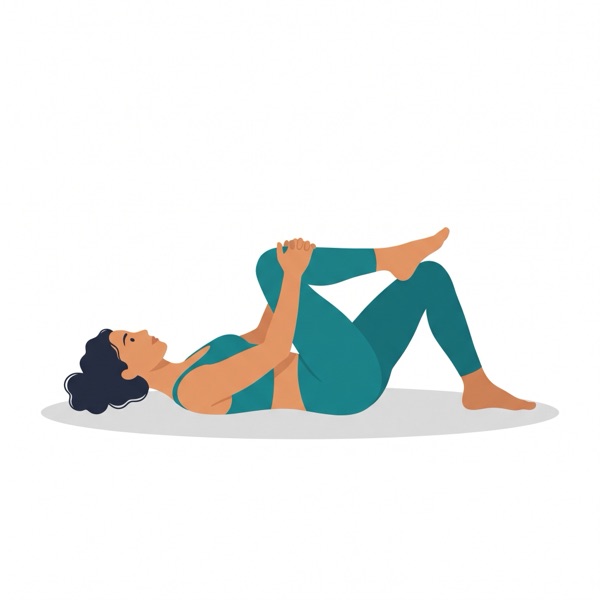
Lie on your back, pull one knee gently toward your chest and keep the other leg bent or straight. Hold 30 seconds per side, then both knees together. Lengthens the lower back and glutes.
2. Supine spinal twist
On your back, drop both bent knees to one side, arms out wide. Keep shoulders down. 30 seconds per side. Full guide: supine spinal twist.
3. Cat-cow
On hands and knees, alternate rounding your back up (cat) and letting your belly drop (cow). Move with your breath for 45–60 seconds. Full guide: cat-cow stretch.
4. Child's pose
Knees wide, hips back toward heels, arms forward, forehead down. 45–60 seconds. Full guide: child's pose.
5. Pelvic tilt
On your back with knees bent, gently flatten your lower back into the floor by tightening your belly, then release. 10 slow reps.
6. Sphinx stretch
Lie on your stomach, prop up on your forearms, and let your lower back gently extend. 30–45 seconds. Skip it if extension increases pain. Full guide: sphinx stretch.
7. Kneeling hip flexor stretch
Tight hip flexors tilt the pelvis forward and load the lower back. Half-kneel, tuck your pelvis and shift forward gently. 30 seconds per side. Full guide: hip flexor stretches.
8. Hamstring stretch
Lying on your back, raise one straight leg and hold behind the thigh (or use a strap). 30 seconds per side. More in tight hamstrings stretches.
A 5-minute lower back routine
| Stretch | Time |
|---|---|
| Pelvic tilts | 45 s |
| Knee-to-chest, each side | 30 s × 2 |
| Supine spinal twist, each side | 30 s × 2 |
| Cat-cow | 45 s |
| Child's pose | 45 s |
| Hip flexor, each side | 15 s × 2 |
Do it once a day, or twice if you sit all day. If mornings are your worst time, read stiff back in the morning.
Why these stretches help
Most everyday lower back stiffness involves the muscles around the spine and the muscles that attach to the pelvis: hip flexors, glutes and hamstrings. Gentle stretching keeps those tissues moving, and movement in general tends to help ordinary back pain more than bed rest.
Do it with a guided timer
Suppl's Lower Back Relief routine runs knee-to-chest, supine spinal twist, cat-cow, sphinx and pelvic tilts in about 3 minutes with a built-in timer and safety cues. If your back stiffness comes with tight hips, the Deep Hip Opener routine is a good partner. See also stretching app for back pain.
Frequently asked questions
How long should I hold stretches for lower back pain?
About 30–60 seconds for static stretches, and 30–60 seconds of slow repetitions for moves like cat-cow and pelvic tilts.
Should I stretch my back if it hurts?
For mild stiffness, gentle stretching within a comfortable range is usually fine. Stop if pain gets sharper or spreads down a leg.
How often should I do lower back stretches?
Daily is ideal. Short sessions spread through the day help if you sit a lot.
Can tight hamstrings cause lower back pain?
They can contribute by pulling on the pelvis. Stretching hamstrings and hip flexors often eases lower back stiffness.