Flexibility vs Mobility: What's the Difference?
Flexibility vs mobility explained simply: passive range vs active control, how to test each, and how to train both with stretching and mobility drills.
By Ayoub Farid · · 2 min read
People use "flexibility" and "mobility" interchangeably, but they mean slightly different things. Knowing the difference helps you train for what you actually need.
Definitions
Flexibility is how far a muscle can lengthen, often measured passively (with help from gravity, a strap or your hands). Example: how high someone can lift your straight leg while you lie on your back.
Mobility is how well you can actively move a joint through its range with control. Example: how high you can lift your own straight leg without help.
Most people have more flexibility than mobility: you can reach a position with help but can't get there on your own.
Why the difference matters
- For daily life: mobility is what lets you squat to pick something up, reach overhead, or turn to look behind you while driving.
- For sport: you need active control in the positions you play in.
- For flexibility goals like the splits: passive flexibility matters most.
Both improve each other. Stretching gives you range; mobility work teaches you to use and control it.
Simple tests
| Test | Flexibility | Mobility |
|---|---|---|
| Hamstrings | Lying, strap pulls leg up | Lying, lift leg without help |
| Shoulders | Arm pulled overhead by partner | Wall angels with full contact |
| Hips | Passive pigeon depth | 90/90 switches without hands |
| Ankles | Calf stretch depth | Knee-to-wall test; see ankle mobility |
How to train flexibility
- Static stretches held 30–60 seconds.
- PNF stretching.
- Consistency: most days.
How to train mobility
- Controlled dynamic movements: leg swings, cat-cow, world's greatest stretch.
- Active holds: lift a limb into range and hold it there for 5–10 seconds.
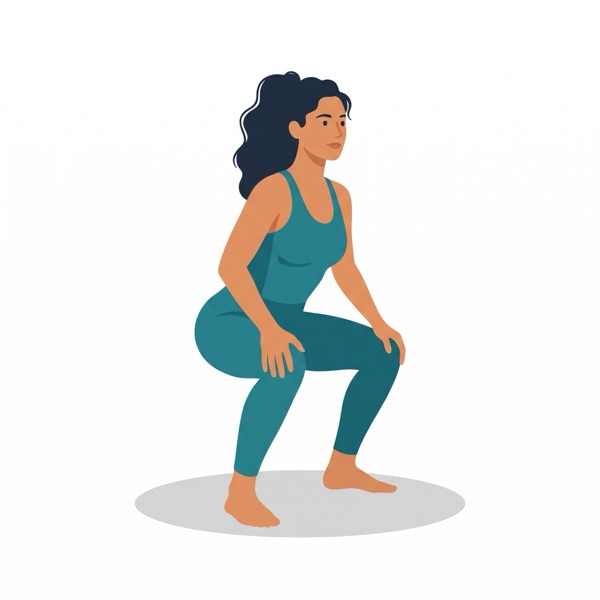
- Strength through range: deep squats, lunges, Cossack squats.
A balanced week
Do static stretching most days (5 minutes), and 2–3 short mobility sessions per week. See hip mobility exercises for a ready-made session.
Mobility is trending for a reason
The ACSM's 2027 fitness trends survey ranked "balance, flow and core strength," which includes mobility-focused training, at #3 worldwide. More in mobility trends 2027.
Do it with Suppl
Suppl covers both: static routines for flexibility (Leg Flexibility, Deep Hip Opener, Full Body Flexibility) and a full-body dynamic category with moves like the world's greatest stretch, deep squat hold, walking lunge with twist and sun salutation flow.
Frequently asked questions
Is mobility more important than flexibility?
For daily life and sport, mobility usually matters more, but flexibility supports it.
Can you be flexible but not mobile?
Yes. Many people can be pushed into a position they can't reach actively.
Does stretching improve mobility?
It improves range, which mobility needs. Add active drills for control.
How often should I do mobility work?
2–3 times a week, plus short daily stretching.