Stretches for Swimmers: Shoulders, Lats, Hips and Ankles
Stretches for swimmers to keep shoulders, lats, chest, hips and ankles mobile, with a dry-land warm-up and a 5-minute post-swim stretch routine.
By Ayoub Farid · · 2 min read
Swimming asks for big shoulder range, long lats, a mobile upper back and flexible ankles for an efficient kick. Hours of freestyle can also tighten the chest and front of the shoulders. Good mobility keeps your stroke long and comfortable.
Dry-land warm-up (5 minutes, before getting in)
- Arm circles: small to large, 10 forward and back.
- Arm swings across the body: 10.
- Torso twists: 10 per side.
- Cat-cow: 6 slow reps. See cat-cow stretch.
- Leg swings: 10 per leg.
- Ankle circles: 10 per direction.
Post-swim stretch routine (5 minutes)
1. Child's pose with arms forward (45 s)
Stretches the lats. Walk hands to each side for 15 s more. See child's pose.
2. Doorway chest stretch (30 s)
Counteracts tight pecs. See doorway chest stretch.
3. Cross-body shoulder stretch (20 s per side)
Back of the shoulder.
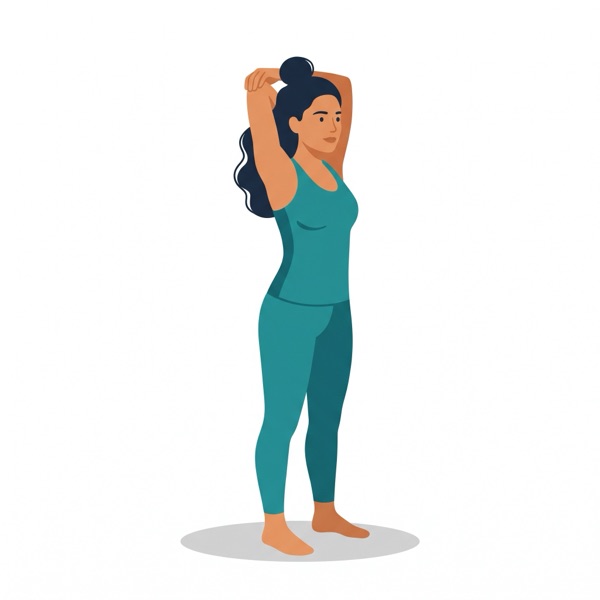
4. Overhead triceps stretch (20 s per side)
5. Thread the needle (20 s per side)
Upper back rotation for breathing. See thread the needle.
6. Kneeling hip flexor stretch (20 s per side)
For a better body line and kick.
7. Seated ankle stretch (30 s)
Kneel and sit back on your heels with the tops of your feet on the floor (use a cushion). Improves plantar flexion for kicking.
Shoulder health for swimmers
Swimmers often have very mobile shoulders already. Stretching should be balanced with strengthening the shoulder blade and rotator cuff muscles: band external rotations, wall angels and rows. If you're hypermobile, emphasize strength over more stretching.
Breathing side and asymmetry
If you breathe mostly to one side, you may find one side tighter. Stretch the tighter side a little longer, and practice bilateral breathing.
Do it with Suppl
Suppl's library covers swimmers' key areas: the neck and shoulders and chest and upper back categories (16 stretches total), plus hip flexor and ankle stretches. Full Body Flexibility (about 4 minutes) makes a good post-swim routine. Read shoulder stretches for more.
A rest-day mobility session
On non-swim days, spend 8–10 minutes on mobility: cat-cow, thread the needle, wall angels, child's pose with side reaches, kneeling hip flexor stretch and ankle stretches. Add band external rotations and rows for shoulder strength. This balance of mobility and strength keeps shoulders resilient through high training volume and helps you hold a long, streamlined position in the water.
Frequently asked questions
Should swimmers stretch before swimming?
Yes, with dynamic moves on dry land.
What's the most important stretch for swimmers?
Lat and chest stretches, plus ankle flexibility for kicking.
Can swimmers be too flexible?
Some are hypermobile; they should focus on shoulder strength and control.
How often should swimmers stretch?
After most sessions, plus short mobility work on rest days.