Guided Stretching vs Video Classes: Which Works Better?
Guided timer routines or instructor video classes? Compare how each stretching format fits your schedule, teaches form and keeps you consistent.
By Ayoub Farid · · 2 min read
Stretching apps come in two main formats: guided routines (illustrations or short clips with a timer that moves you through each stretch) and video classes (an instructor leads a full session in real time). Both work. Which one works for you depends on your time, your goal and how you like to learn.
Guided routines
A guided routine shows one stretch at a time with a countdown, a short cue and the next stretch coming up. Suppl, Bend and many others work this way.
Strengths
- Short: often 2–10 minutes.
- Usable anywhere, silently: at a desk, in a hotel, next to a sleeping partner.
- Easy to repeat daily; you learn the sequence quickly.
- No pace mismatch: the timer is the same every time.
Weaknesses
- Less hands-on technique teaching than a class.
- Can feel repetitive if the library is small.
Video classes
An instructor talks you through a longer session, often 15–45 minutes.
Strengths
- Rich technique cues and modifications.
- Feels like a real class; good motivation for some people.
- Better for structured goals like splits programs.
Weaknesses
- Hard to fit on busy days.
- Needs sound and screen attention.
- Easier to skip ("I'll do it when I have time").
Which format builds more flexibility?
Flexibility depends mainly on total weekly time under stretch and consistency. Five minutes a day is 35 minutes a week; one 30-minute class a week is less, and many people skip it. For most people, short daily guided routines produce more progress because they actually happen. See how long it takes to get flexible.
Best of both
- Use guided routines daily for your habit.
- Use a longer video class once a week if you enjoy it.
- Use an AI stretch coach for technique questions between sessions.
How Suppl's guided format works
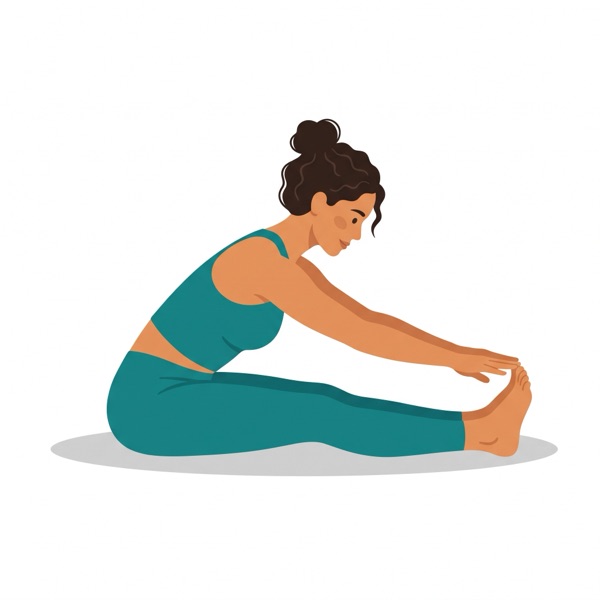
Each Suppl routine is a fixed sequence of illustrated stretches. When you press start, a circular timer counts each stretch down and moves on automatically, with a safety cue and the next stretch shown on screen. Routines run 2–5 minutes. You can pause or skip any time.
Quick decision guide
| You... | Choose |
|---|---|
| Have 5 minutes most days | Guided routines |
| Want to learn complex flexibility skills | Video classes |
| Stretch at work or in shared spaces | Guided routines |
| Need an instructor's energy to show up | Video classes |
| Want quick answers about form | A coach (human or AI) |
See best stretching apps for app recommendations in each style.
Frequently asked questions
Are guided stretching apps good for beginners?
Yes. Short routines with illustrations and safety cues are an easy starting point.
Do I need video to learn correct form?
Not for basic stretches. Clear illustrations and cues are enough for most; video helps for complex moves.
How long should a guided stretching session be?
2–10 minutes daily is plenty for general flexibility.
Can I do guided stretching at work?
Yes; that's one of its main advantages. See desk stretches.